NAVIGATING CLIMATE RISK PRICING IN REAL ESTATE
For a long time, buying or selling property came down to a pretty standard checklist. You looked at the neighborhood, counted the bedrooms, checked out the local schools, and maybe factored in whether the kitchen needed an update. But the rulebook is changing fast. Today, environmental hazards are stepping into the spotlight, completely shifting how we value property.
Think about the headlines we see every day. Wildfires, rising sea levels, brutal heatwaves, and severe flooding are no longer just distant warnings for the future. They are happening right now, and they carry a massive financial footprint. Lenders, insurance companies, and smart investors are paying attention by adopting climate risk pricing. This simply means that environmental threats are now baked directly into mortgage rates, property values, and insurance costs.
If you are trying to buy a house, put money into commercial buildings, or build something new, ignoring this shift is no longer an option. Understanding how environmental risks affect property values is vital for keeping your finances secure over the long haul.
BREAKING DOWN CLIMATE RISK PRICING
At its core, climate risk pricing is just the market catching up to reality. In the past, houses in high-risk spots like floodplains or right on the coast were valued mostly on how pretty the view was. Often, government-backed insurance or disaster relief made those risky spots seem cheaper than they actually were to maintain.
As natural disasters get worse and happen more often, those safety nets are starting to fray. Climate risk pricing forces a hard look at a single question: what will it actually cost to own this building over the next thirty years?
When the market gets honest about these environmental threats, a few clear things tend to happen. Initial price tags usually go down or simply stop growing the way they used to. At the same time, the day-to-day costs of holding onto the property climb because insurance gets much more expensive. Owners also find themselves spending more cash just to retrofit buildings so they can survive harsher weather.
THE FORCES DRIVING THE CHANGE
This whole movement isn’t happening in a vacuum. A few major players are fundamentally altering how the financial world handles property.
THE INSURANCE CRUNCH
Insurance is basically the canary in the coal mine for real estate. In places prone to natural disasters, big insurance companies are either packing up and leaving or hiking rates through the roof. When you cannot get affordable insurance, getting a mortgage becomes nearly impossible. Since traditional lenders demand hazard coverage before they hand over cash, uninsurable properties lose their value in a hurry.
NEW RULES AND DISCLOSURES
Governments and financial watchdogs are pushing for a lot more transparency. New regulations mean that public companies and large investment firms have to report how vulnerable their assets are to environmental threats. For real estate, this forces buyers and sellers to confront physical risks on paper long before anyone signs the final paperwork.
INSTITUTIONAL MONEY AND ESG GOALS
Big institutional funds, pensions, and real estate trusts are pouring their energy into sustainable investments. These major players are actively pulling their cash out of vulnerable properties and putting it into infrastructure that can actually take a beating from the weather.
HOW DIFFERENT SECTORS FEEL THE IMPACT
Climate risk pricing does not hit every type of real estate the exact same way. Location and asset type matter immensely.
THE SQUEEZE ON RESIDENTIAL HOMES
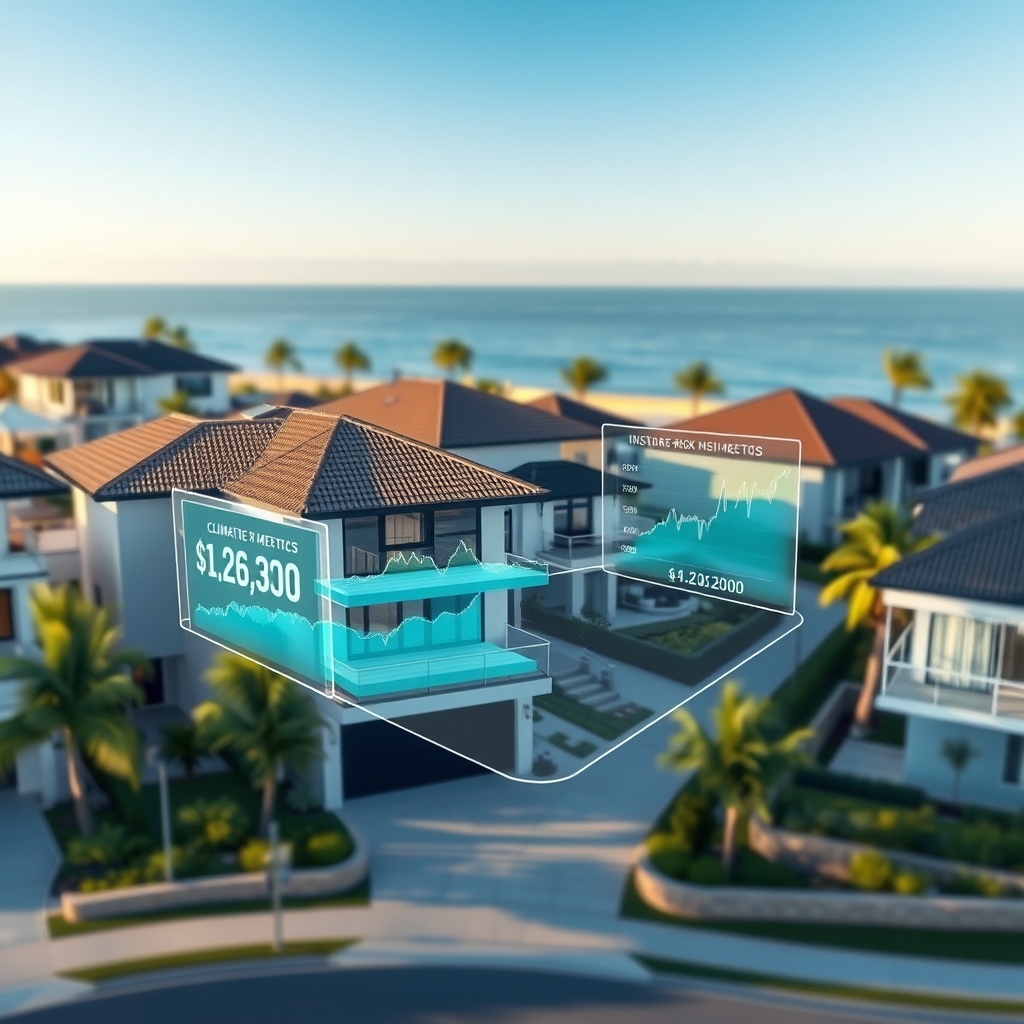
Everyday buyers are starting to feel the pinch in both suburban neighborhoods and coastal towns. Coastal luxury spots are facing a serious reality check, with buyers constantly asking about storm surges and elevation. Meanwhile, inland areas near forests are dealing with wildfire concerns that drag down property values, even if the trees haven’t burned yet.
COMMERCIAL REAL ESTATE YIELDS
Commercial investors have massive amounts of money on the line. Warehouses, office parks, and retail centers cost a fortune to run. If a major distribution hub sits in a flood zone, just one bad storm can wreck inventory and halt business. Because of this, buyers are demanding steep discounts on risky commercial assets to make up for future trouble.
PRACTICAL STRATEGIES FOR EVERYONE INVOLVED
Since this approach is becoming the new normal, everyone in the real estate game needs a fresh playbook.
TIPS FOR HOMEBUYERS
If you are house hunting right now, you need to dig deeper than a standard home inspection. Use public mapping tools to check the specific environmental score of the neighborhood over the life of your mortgage. Before you fall in love with a place, get insurance quotes immediately. Never assume that just because a home is insured today, you will afford the coverage tomorrow. Finally, budget for upgrades like better drainage or stronger roof fastenings.
TIPS FOR INVESTORS
Investors have to treat environmental due diligence like oxygen. Run financial models that assume higher insurance bills and potential vacancy issues after a storm. Look for regional markets that have lower exposure to extreme weather. You can also hunt for undervalued properties in moderately risky areas and add resilient upgrades to attract tenants who care about safety.
TIPS FOR DEVELOPERS
Developers have the chance to design toughness right into the blueprints. Build well above flood levels and use materials that can take a hit. Integrate backup power sources like solar and battery storage so properties keep running when the local grid goes down. Most importantly, just stay away from building in obvious danger zones like wetlands or high-risk wildfire areas.
THE FINAL VERDICT
Climate risk pricing is not a passing fad. It is the permanent evolution of how we think about property value. While the transition can feel stressful, it ultimately leads to a much healthier and more honest market. By facing environmental realities head-on today, the industry can dodge massive financial bubbles and build communities that last.
Whether you are buying your very first house or managing a massive portfolio of commercial buildings, acknowledging these risks is the smartest move you can make for your financial future.