BUILDING A TRULY GREEN HOME: MORE THAN JUST SOLAR PANELS
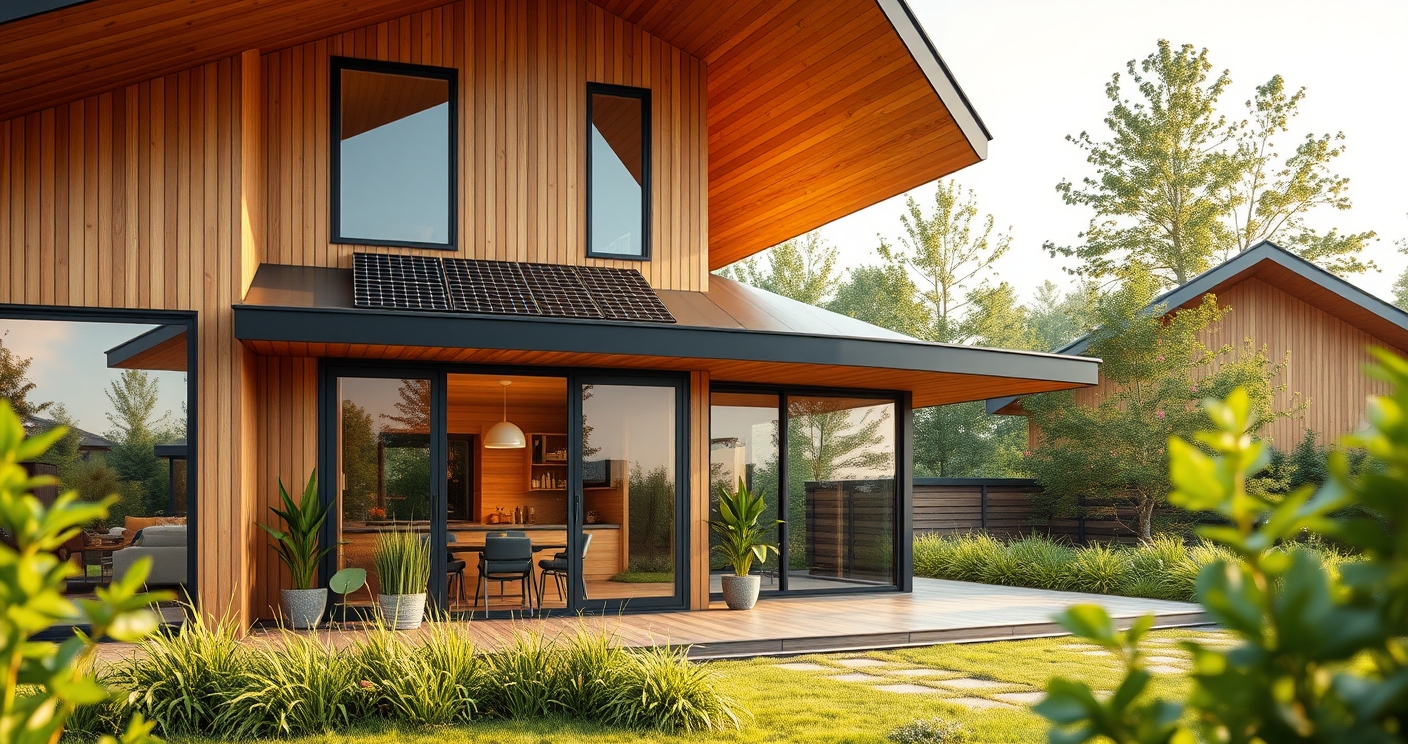
For years, when we talked about building sustainable homes, the focus was almost entirely on energy efficiency. We thought about sealing up drafts, packing in insulation, slapping solar panels on the roof, and choosing those snazzy Energy Star appliances. And honestly, that made a lot of sense! Cutting down on how much energy a home uses every day is incredibly important for both our planet and our pocketbooks. But what if we told you there’s a huge piece of the puzzle that often gets missed?
As custom home builders, we absolutely love helping our clients bring their dream homes to life. More and more, those dreams include a real commitment to sustainability. While discussions naturally lean towards things like solar arrays and smart thermostats, there’s a quieter, yet incredibly powerful, factor in the room: embodied carbon.
Truly understanding the difference between embodied carbon and operational carbon, and recognizing why the materials you choose – especially things like steel and concrete – are just as vital as your home’s energy use, is the crucial first step toward creating truly sustainable residences.
THE ENERGY BILL YOU ALREADY KNOW: OPERATIONAL CARBON
Let’s dive into something you’re likely already familiar with. Operational carbon refers to all those greenhouse gas emissions that pop up when your home is actually being used, day in and day out. Think of it as the carbon footprint generated by simply living comfortably and keeping your home running.
This includes the energy needed for everything from keeping you warm in winter and cool in summer, powering all the lights inside and out, running your refrigerator, washing machine, and all your other gadgets, and, of course, heating up water for those relaxing showers or a load of laundry. Over a home’s lifetime, these day-to-day emissions typically add up to a significant chunk of its total carbon impact. That’s precisely why we’ve seen such a big push for better insulation, high-efficiency windows, smart HVAC systems, and incorporating renewable energy sources like solar panels. These efforts directly slash the amount of energy your home needs to function, which means a smaller carbon footprint and lower utility bills. It’s something you can clearly see, understand, and feel in your monthly budget, making it super relatable for homeowners.
EMBODIED CARBON: THE HIDDEN STORY OF YOUR HOME’S MATERIALS
Now, let’s talk about something a bit less obvious: embodied carbon. This is the grand total of all greenhouse gas emissions released throughout the entire life of your building materials and components, long *before* your home is even ready for you to move in. You can think of it as the “carbon price tag” for simply bringing the physical structure of your house into existence.
The journey of embodied carbon typically starts with the extraction of raw materials, whether that’s mining iron ore, digging up limestone for cement, or harvesting timber. Then, these raw materials are manufactured and processed, transforming them into the usable products we build with – like smelting iron into steel, crushing limestone into cement, or milling wood. This manufacturing stage is often the most carbon-intensive part, simply because industrial processes demand so much energy. Next, there’s transportation, moving those raw materials to factories and then the finished products to your building site; the distance, how they’re moved, and their weight all play a role. Even the construction process itself contributes, using energy for machinery, equipment, and temporary heating or cooling. And it doesn’t stop there; future maintenance, repairs, and replacements of materials throughout your home’s life also add to its embodied carbon. Finally, at the very end of its life, when the building is deconstructed, the carbon tied to demolition, waste disposal, recycling, or reusing materials is also part of this hidden footprint.
Unlike operational carbon, which slowly accumulates over decades, a huge portion of your home’s embodied carbon is essentially “locked in” on day one. It’s an upfront carbon investment that leaves a profound impact on our planet right from the start.
WHY BOTH MATTER: THE HOLISTIC VIEW OF SUSTAINABILITY
For a long time, operational carbon was the main event. Why? Because historically, homes weren’t exactly energy-efficient marvels, so their daily operational emissions completely dominated their total carbon footprint. But guess what? Thanks to awesome advancements in building codes, insulation tech, and renewable energy, our homes are becoming incredibly energy-efficient.
This shift has really put embodied carbon under the spotlight. As we drive down operational carbon, the *proportion* of a building’s total lifetime emissions that comes from embodied carbon actually goes up, way up! For top-tier, net-zero, or even net-positive energy homes, embodied carbon can easily account for 50% or more of the total carbon footprint over a typical 60-year lifespan. This means if our only focus is on energy use, we’re literally missing half – or more – of the environmental story.
So, for truly sustainable residential construction, we absolutely must embrace a holistic approach. It’s simply not enough to build a home that sips energy; we also need to construct one where the very materials used have the smallest possible carbon impact from the get-go.
THE MATERIAL DIFFERENCE: SMARTER CHOICES, LOWER IMPACT
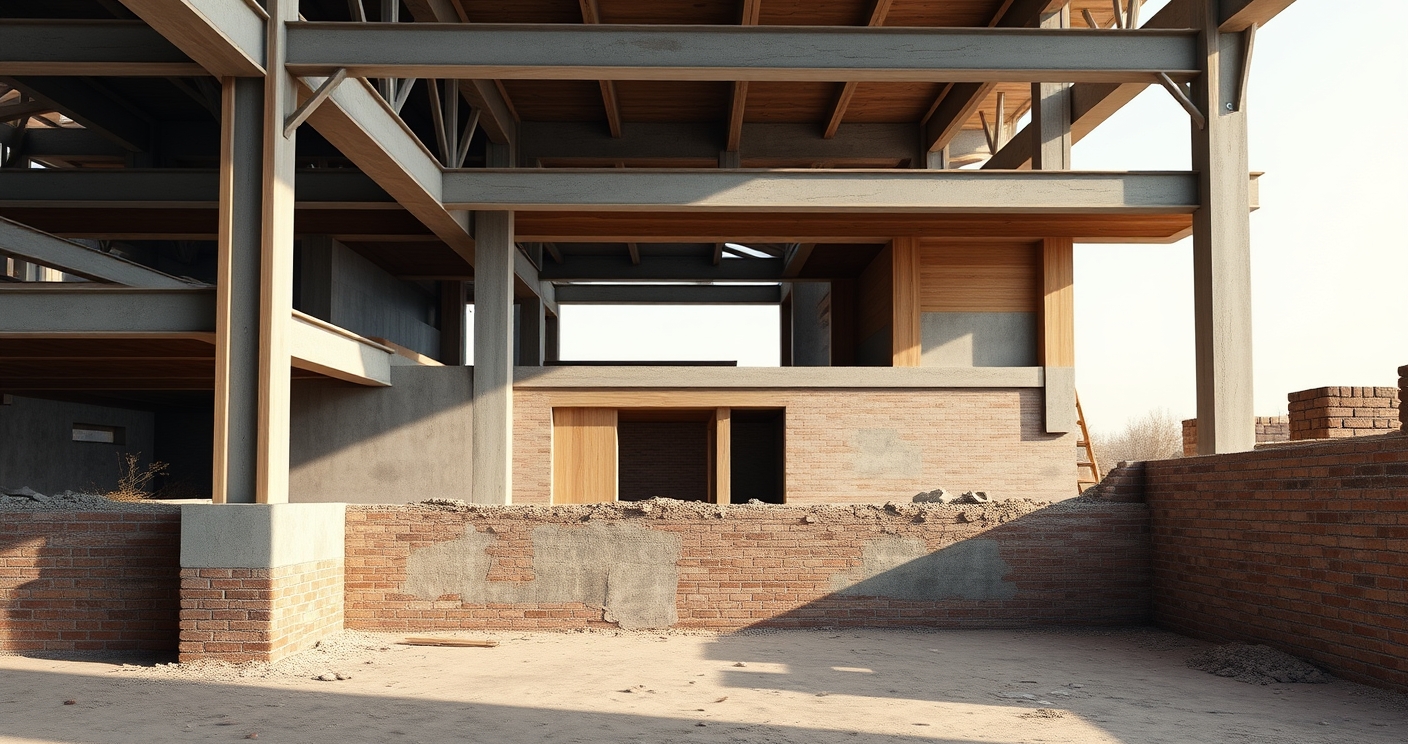
This brings us to a super important point: the materials you choose for your home. When we talk about embodied carbon, it’s clear that not all materials are created equal. The decisions you make for your structural elements, foundations, and finishes can lead to vastly different carbon footprints. Let’s take a closer look at a couple of common examples, like steel and concrete, which you specifically mentioned.
STEEL: STRONG, DURABLE, AND A CARBON CONCERN
Steel is an incredible building material, celebrated for its amazing strength, durability, and versatility. It’s a key player in many modern home designs, especially for structural frames, beams, and roofing. However, the traditional way we make new steel is an incredibly energy-intensive process.
Creating new steel from raw iron ore typically involves blast furnaces that demand massive amounts of energy, mostly from fossil fuels, which then release substantial amounts of CO2. Plus, just getting the raw materials, like mining iron ore and coking coal, has its own environmental costs. On the bright side, despite its carbon intensity, steel’s strength means we can often build lighter structures and achieve longer spans, potentially cutting down on the total amount of material needed. And its recyclability is a huge plus; making new steel from recycled material uses far less energy than starting from scratch.
CONCRETE: THE FOUNDATION OF MODERN HOMES, WITH ITS OWN FOOTPRINT
Concrete is everywhere in construction; it forms the foundations, slabs, and sometimes even the walls of our homes. It’s tough, fire-resistant, and easy to get. But here’s the catch: its main binding agent, cement (specifically Portland cement), is a significant contributor to global CO2 emissions.
The process of producing clinker, a vital part of cement, requires heating limestone and other materials to incredibly high temperatures – over 1400°C – in giant kilns. This chemical reaction, called calcination, directly releases CO2 from the limestone itself, on top of the CO2 from burning fossil fuels just to get that heat. And let’s not forget the sand and gravel, essential parts of concrete, which are finite resources whose extraction can affect local ecosystems. The good news? There’s a lot of innovation happening to develop lower-carbon concretes. We’re seeing options that include industrial byproducts like fly ash or slag, or even alternative binders that need less energy or chemical reactions to produce.
CONSIDERING ALTERNATIVES AND SMARTER CHOICES
To really dial down embodied carbon, it’s smart for clients to chat with their builders and designers about these options:
Think about using sustainably harvested wood or timber; as trees grow, they actually absorb CO2, making them a great lower-carbon choice. Modern mass timber products, like CLT and Glulam, are increasingly popular for their structural abilities. Reclaimed and recycled materials, such as salvaged timber, recycled steel, or old bricks, can drastically reduce the need for brand-new production. Choosing materials produced and supplied close to your building site also cuts down on transportation emissions. Always ask for materials with high recycled content – like steel or concrete mixes that incorporate industrial byproducts – as this can significantly lower their embodied carbon. And finally, investing in high-quality, durable materials that are built to last means fewer replacements down the road, which in turn reduces the embodied carbon over your home’s entire lifespan.
EMPOWERING YOUR CHOICES: YOUR ROLE IN BUILDING GREENER
As a client, your decisions hold immense power in shaping the carbon footprint of your future home. Here’s how you can truly make a difference:
Don’t just ask about energy efficiency; also inquire about the embodied carbon of your materials. Ask your builder or architect where materials come from, how they’re made, and what low-carbon alternatives are available. Encourage your design team to consider a full lifecycle assessment for key material choices; this kind of analysis helps evaluate environmental impacts from start to finish. Whenever possible, specify materials known for their lower embodied carbon, such as sustainably harvested wood, steel with high recycled content, or concrete that uses supplementary cementitious materials. Choosing durable, high-quality materials built to last is inherently sustainable, as it reduces the need for frequent, carbon-intensive repairs and replacements. Most importantly, partner with architects, designers, and builders who genuinely understand both operational and embodied carbon and are truly committed to sustainable practices.
BUILDING FOR THE FUTURE: COMFORT AND RESPONSIBILITY
Building a truly sustainable home in the 21st century means expanding our view beyond just the monthly energy bill. It means grasping that every single beam, every concrete slab, and even every nail carries its own carbon footprint. While operational carbon is still incredibly important, the upfront impact of embodied carbon, particularly from materials like steel and concrete, now demands our equal attention.
By making smart, informed material selections, embracing innovative solutions, and collaborating with professionals who prioritize holistic sustainability, you can create a home that is not only beautiful and energy-efficient but also genuinely low-carbon right from its foundation. This way, your dream home becomes a powerful statement of both comfort and profound responsibility for a healthier planet for generations to come.