BUILDING TOMORROW: HOW MASS TIMBER AND CLT ARE RESHAPING SUSTAINABLE CONSTRUCTION
Something big is happening in the construction world. There’s a growing buzz of innovation, all fueled by an urgent need for sustainability. Our planet is really struggling with climate change, and the built environment—think of all the buildings around us—is a huge contributor to global carbon emissions. It’s under immense pressure to change. For decades, concrete and steel have been the undisputed heavyweights, the backbone of our cities. But now, a new champion is stepping out of the forest: mass timber. Cross-Laminated Timber, or CLT, is leading the charge, offering an exciting, carbon-storing, and incredibly strong alternative that’s set to completely redefine how we build.
OUR PLANET’S CALL: WHY SUSTAINABLE BUILDING IS NON-NEGOTIABLE NOW
Our planet is practically screaming for change, isn’t it? Climate scientists are warning us about irreversible damage if we keep going down the same path. This means the construction industry finds itself at a truly critical moment.
THE HEAVY ENVIRONMENTAL COST OF OLD MATERIALS
Let’s be honest: making traditional building materials like concrete and steel is notoriously energy-hungry and carbon-intensive. Cement, which is the main ingredient in concrete, accounts for about 8% of all global CO2 emissions. That’s a colossal footprint, coming from the high temperatures needed to produce clinker (a key component of cement) and the chemical process itself, which releases CO2. Steel production also guzzles vast amounts of energy and adds significantly to greenhouse gas emissions. While these materials were historically essential for strength and durability, relying on them simply isn’t sustainable anymore in this era of climate crisis.
GREENER FUTURE: THE ASCENSION OF NATURAL MATERIALS
To lessen this impact, our industry is increasingly looking towards natural, renewable resources. From reclaimed wood to bamboo and even straw, a diverse range of materials is emerging. They offer promising ways to slash “embodied carbon”—that’s all the greenhouse gas emissions linked to producing, transporting, and building with materials. Among these, engineered wood products, known collectively as mass timber, are proving to be a powerful, scalable solution. They can compete head-to-head with traditional materials on strength, durability, and cost, all while delivering unmatched environmental benefits.
MASS TIMBER: REIMAGINING CONSTRUCTION WITH WOOD
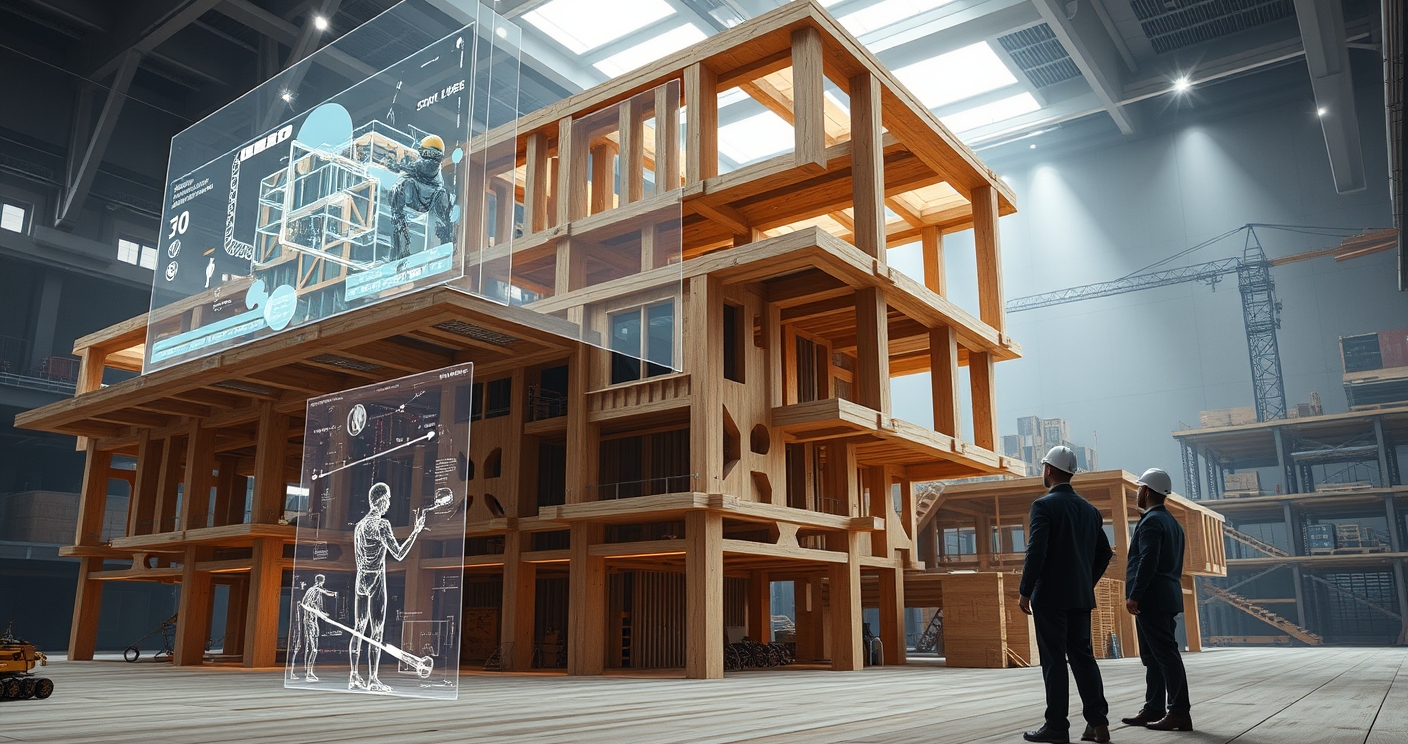
So, what exactly is mass timber? It refers to a category of engineered wood products designed for the structural framework of mid-rise and even high-rise buildings. Unlike the smaller pieces used in traditional stick framing, mass timber elements are large, solid, and capable of holding massive loads. This group includes Glued Laminated Timber (Glulam), Laminated Veneer Lumber (LVL), and most notably, Cross-Laminated Timber (CLT). These materials harness the natural strength of wood and then boost it even further through clever engineering, transforming timber into a high-performance building block perfectly suited for the 21st century.
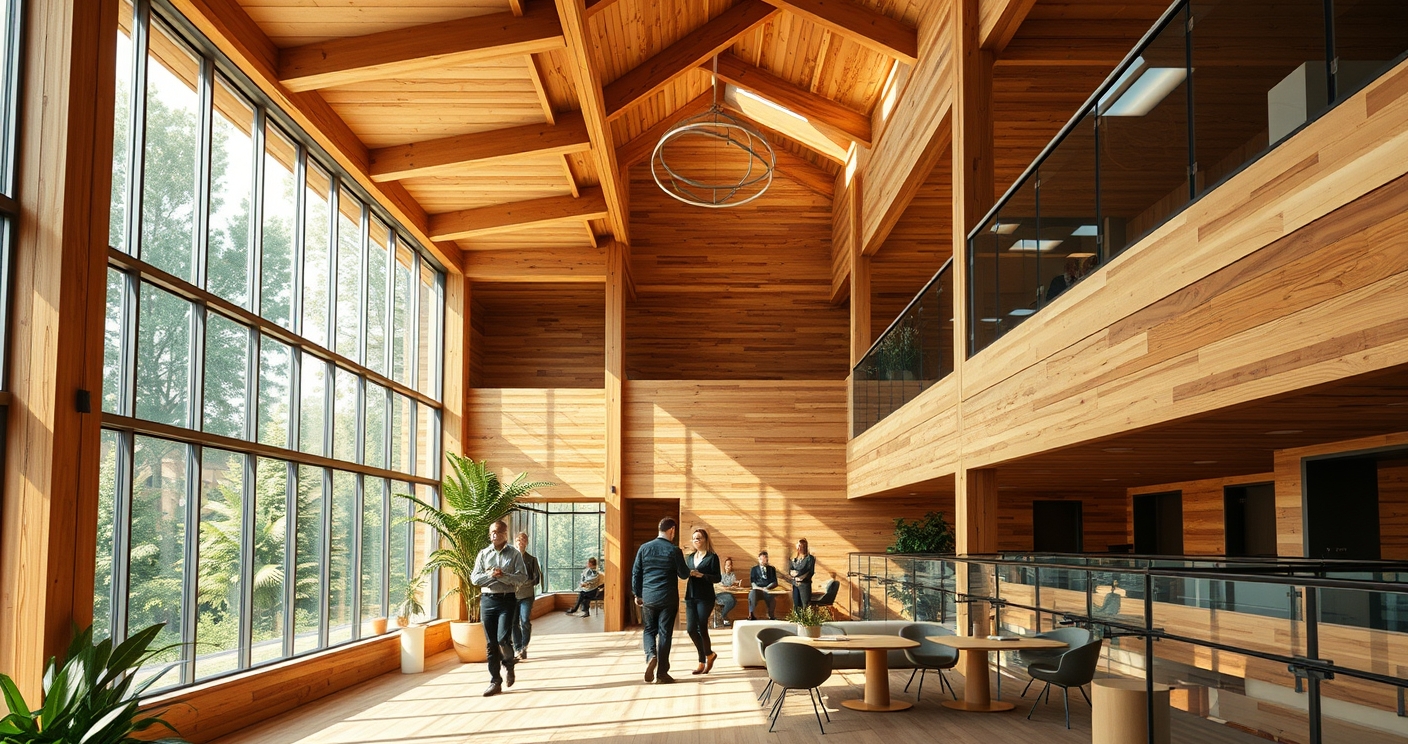
But mass timber’s appeal isn’t just about its eco-friendly credentials. It also means faster construction times, less waste on-site, lighter building weights (which can simplify foundations and save money), and a really inviting aesthetic. Often, this design keeps the wood exposed, helping occupants feel more connected to nature—a concept we call biophilic design.
SPOTLIGHT ON CLT: NATURE’S HIGH-PERFORMANCE PANEL
Out of all the mass timber options, Cross-Laminated Timber, or CLT, is truly stealing the show. It’s quickly becoming the go-to material for innovative, sustainable architecture all over the world.
WHAT IS CLT AND HOW DO WE MAKE IT?
Imagine giant plywood, but even bigger and stronger. CLT panels are made by layering dimension lumber (usually spruce, pine, or fir) in alternating perpendicular directions. Each layer is then bonded together with strong structural adhesive under immense pressure, forming incredibly solid, multi-layered panels. These panels can be huge—up to 100 feet long, 10 feet wide, and over a foot thick—making them perfect for the walls, floors, and roofs of substantial structures. This “cross-lamination” massively boosts the wood’s stability, strength, and rigidity, overcoming some of wood’s natural quirks (like its properties varying depending on the grain direction).
The manufacturing process is incredibly precise and industrialized. Panels are often pre-cut off-site to exact specifications, complete with window and door openings. Then, they’re delivered to the construction site, ready for quick assembly. This “flat-pack” approach dramatically streamlines the entire building process.
STRENGTH AND STRUCTURE: CHALLENGING CONCRETE’S REIGN
One of CLT’s most impressive features is its incredible strength-to-weight ratio. This allows it to compete with, and in some cases even surpass, the structural capabilities of concrete. While concrete is often seen as the ultimate strong material, CLT offers comparable load-bearing capacity but with a significantly lighter footprint.
CLT panels can handle immense compressive and tensile forces, making them ideal for multi-story buildings. Those cross-laminated layers distribute loads efficiently, preventing warping and significantly boosting stability.
Buildings constructed with CLT have shown amazing performance in earthquake zones. Their relatively light weight means less inertial force during an earthquake, and their inherent flexibility allows them to absorb and dissipate energy more effectively than rigid concrete structures.
Surprisingly, large mass timber elements like CLT perform remarkably well in fires. When exposed to flames, the outer layer of the timber chars, creating an insulating layer that protects the inner core. This predictable charring rate lets engineers design structures that maintain their structural integrity for specific periods, easily meeting strict fire safety codes. Unlike concrete, which can spall and rapidly lose strength under extreme heat, CLT’s behavior is much more predictable and controlled.
CLT’s panelized nature also means it can accommodate large spans and really creative architectural designs, including impressive cantilevered elements. It offers a design flexibility often associated with concrete.
THE CARBON SOLUTION: HOW CLT LOCKS AWAY CO2
Here’s where CLT truly shines and offers its most profound advantage over concrete: its unique role as a carbon sink. This isn’t just about avoiding emissions; it’s about actively pulling carbon out of our atmosphere.
CARBON STORAGE IN WOOD
Think about how trees breathe. Through photosynthesis, they absorb carbon dioxide from the atmosphere and store it within their woody biomass. When these trees are harvested and transformed into CLT panels, that carbon stays locked away within the building’s structure for its entire lifespan—which could be hundreds of years! Just one cubic meter of CLT can store roughly 0.8 tons of CO2. When you consider the vast quantities of material used in construction, this represents a huge opportunity for long-term carbon storage.
Of course, to truly make this a sustainable benefit, responsible forestry practices are absolutely essential. Sustainable forest management means replanting trees at a rate equal to or greater than harvesting, creating a continuous carbon cycle. Young, growing forests are incredibly effective at absorbing carbon, making well-managed forests a crucial part of our climate solution.
LIFE CYCLE ASSESSMENT (LCA) ADVANTAGES
When we look at the whole picture, from “cradle to grave,” a comprehensive Life Cycle Assessment (LCA) compares the environmental impacts of various materials. LCAs consistently show that CLT and other mass timber products have a significantly lower embodied carbon footprint than concrete and steel.
Making CLT requires considerably less energy than producing cement or steel, which naturally leads to fewer emissions.
When you account for the carbon that’s actually sequestered, CLT can even boast a “negative” carbon footprint over its life cycle! This means it removes more carbon than is emitted during its production and transportation. That’s a game-changer in our quest for truly carbon-neutral or even carbon-negative buildings.
What happens at the end of a building’s life? CLT elements can often be deconstructed and reused, extending their carbon storage potential. If they can’t be reused, the wood can be safely incinerated to generate renewable energy, further offsetting fossil fuel use, or even composted, returning valuable nutrients to the earth.
BEYOND STRENGTH AND CARBON: CLT’S MULTIPLE BENEFITS
But wait, there’s more! CLT’s advantages go far beyond just its structural prowess and environmental credentials. It also helps create a more efficient, healthier, and aesthetically pleasing built environment for everyone.
SPEED AND EFFICIENCY IN CONSTRUCTION
Imagine building faster! The prefabricated nature of CLT panels dramatically speeds up construction timelines. Panels arrive on site precisely cut and ready for assembly, often needing fewer workers and less specialized equipment than traditional concrete pouring or steel erection. This “kit-of-parts” approach minimizes waste on-site, reduces noise pollution, and can significantly cut overall project costs by compressing schedules. Buildings get erected quicker, allowing for faster occupancy and a better return on investment.
BIOPHILIC DESIGN AND OCCUPANT WELL-BEING
Ever feel calmer in a room with exposed wood? You’re not alone! Exposed wood surfaces, often a feature in CLT construction, offer significant biophilic benefits. Research suggests that simply connecting with nature, even through natural materials indoors, can boost cognitive function, reduce stress, and improve overall well-being. The warm, inviting aesthetic of wood creates a more comfortable and appealing environment for occupants. Plus, wood naturally helps regulate indoor humidity and can contribute to better indoor air quality compared to many synthetic materials.
ECONOMIC VIABILITY AND INNOVATION
Let’s talk money. While the initial material costs for CLT might sometimes be similar to or slightly higher than traditional materials, the overall project economics often lean in CLT’s favor. This is thanks to reduced labor, faster construction, and fewer waste disposal costs. As the mass timber industry grows and scales up, we expect economies of scale to further drive down costs. The rise of CLT also sparks innovation across the entire supply chain, from sustainable forest management to advanced manufacturing techniques and exciting new building systems.
PAVING THE WAY FOR A TIMBER FUTURE: CHALLENGES AND OPPORTUNITIES
While the future of mass timber, especially CLT, looks incredibly bright, it’s true there are still some hurdles to overcome. Regulatory challenges, mainly adapting outdated building codes that were designed for steel and concrete, are gradually being addressed through extensive testing and advocacy. The supply chain needs to keep pace with demand, ensuring a reliable and sustainable source of timber. And, of course, public perception and education are key to clearing up any misconceptions about wood’s durability or fire resistance.
However, the opportunities far outweigh the challenges. With increasing government support, growing investor confidence, and a continuous stream of successful, high-profile mass timber projects popping up around the globe, CLT is perfectly positioned to become a mainstream building material.
A NEW ERA OF CONSTRUCTION
Cross-Laminated Timber is so much more than just a building material. It’s a real testament to human ingenuity—how we can harness nature’s power to build a sustainable future. As a carbon-sequestering, high-strength alternative to concrete and steel, CLT offers a truly compelling solution to many of the environmental and logistical challenges facing the construction industry today. By embracing mass timber, we aren’t just putting up structures; we’re actively building a greener, more resilient, and more beautiful world, one timber panel at a time. This shift towards natural materials like CLT isn’t just a fleeting trend; it’s a fundamental step towards creating a truly sustainable built environment for generations to come.